
TL;DR
My five-step plan for passing coding interviews: master a language, read Cracking the Coding Interview, grind LeetCode, do 30-40 mock interviews on Pramp, then validate on interviewing.io.
The question I most frequently get from developers is how to pass a coding interview. What follows is what I think will be sufficient for a person to be well prepared.
1. Master a programming language
If you’re new to coding, make sure you have a solid grip on at least one language. You don’t want this to become a barrier in your interview. If you’re still figuring out where to start, I put together a list of my top resources for learning how to code that might help.
2. Learn algorithms, data structures and complexity analysis
Read the book “Cracking the Coding Interview”. Do the exercises, learn the common algorithms, and how to calculate complexity.
3. Solve problems
Solve different kinds of medium, easy and hard problems on leetcode.com. Your target should be enough practice to be able to solve any problem in 30 minutes. If you get stuck, read the discussion for the problem, learn the solution, and code it yourself.
4. Do mock interviews
If you think you’re ready, do at least 30-40 mock interviews on pramp.com. This helps you learn from others how they solve problems and experience a live interview situation.
5. Final test
If you’re able to clear most interviews on pramp, finally go to interviewing.io and clear at least 3 interviews.
Congratulations!
Now you should be in good shape but do realize after all this you’re not guaranteed success. We get whatever God is destined for us, our job is only to make an effort to seek it. There are competent engineers who are great at leetcode but still don’t clear the interview. We control only one variable in the equation.

Joe Karlsson
Developer Marketing Engineer at CData, leading developer growth for the managed MCP platform that connects AI agents to live enterprise data. Writing about databases, self-hosting, and the things I build. Runs a 60+ container Proxmox homelab with AI-powered automations.
cat newsletter.md
Works on My Machine is my newsletter: thoughts and reactions on tech writing, AI, homelab builds and open source, plus whatever I'm working on. It goes out when I have something to say.
Free, no spam, unsubscribe anytime. Read past issues.
Related Posts
Sep 11, 2026
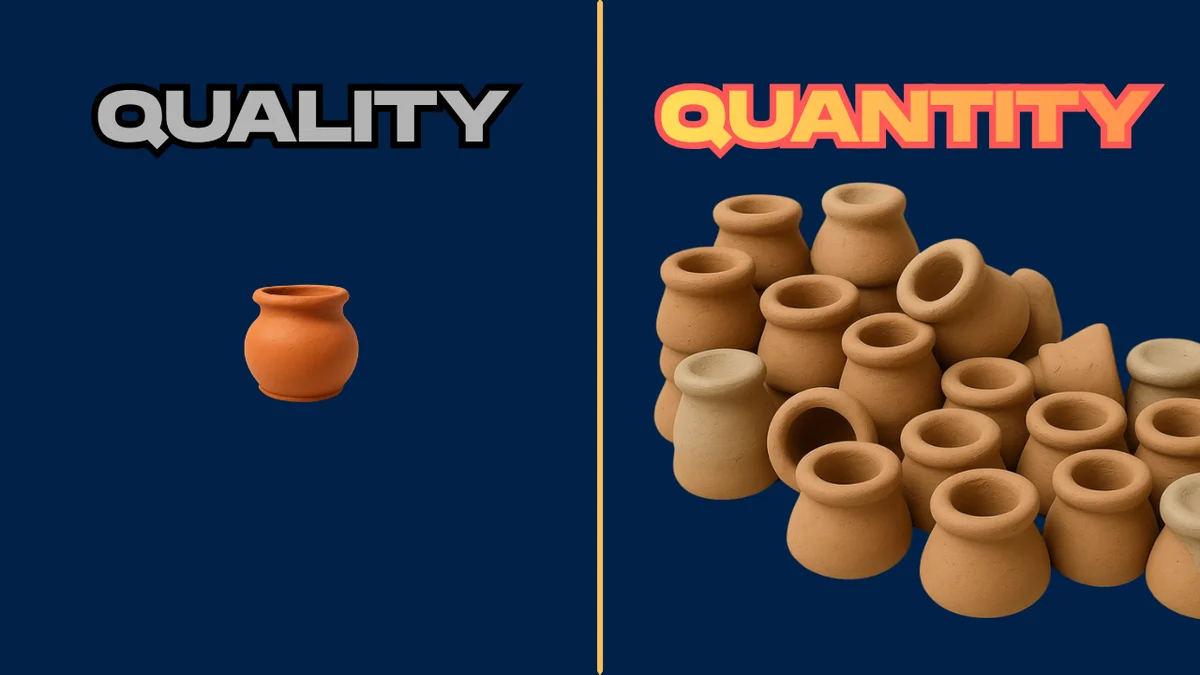
Ship the Ugly Pot
Quantity beats quality as a learning strategy: the Art & Fear pottery story, DORA deploy data, and how to tell a kiln from a gate in your org.

Aug 31, 2026
The Cognitive Case for Play in Technical Work
What research on creativity, flow states, and psychological safety says about the conditions that make your best iterative work possible - and how to build them.
Aug 4, 2026
What I Learned When I Could Finally Prove My Work Mattered
For most of my last job I couldn't say whether my work mattered. What I learned getting the data that finally answered it - and what it did to my influence.