tl;dr in tech - Issue #70
By: Joe Karlsson
Welcome back to my weekly newsletter, where I bring you the latest and greatest insights to keep your software engineering game strong. This week, I’m shining the spotlight on the data and database space, as we unravel some trends that are defining the landscape in 2023. So, let’s dive in and see what’s shaping the future of data management! 💾
- Automated data management: AI and machine learning are revolutionizing database management. Expect to see more automation in tasks such as indexing, tuning, and schema optimization, as intelligent systems learn to optimize databases with minimal human intervention.
- Real-time data processing: With the rapid increase in data generation, real-time data processing is becoming a necessity. Stream processing technologies, such as Apache Kafka and Flink, are gaining momentum as they enable organizations to analyze and act upon data as it’s generated, providing a competitive edge.
- Multi-model databases: Versatility is the name of the game in 2023, and multi-model databases are leading the charge. These powerhouses support various data models within a single, integrated backend, making it easier than ever to manage diverse data types and sources.
- Data mesh architecture: As data silos become a thing of the past, data mesh architecture is gaining popularity. This approach emphasizes decentralized, domain-oriented data ownership and product thinking. By treating data as a product, organizations can enable cross-functional collaboration, improve data discoverability, and drive innovation.
Measuring An Engineering Organization
- Will Larson
tl;dr: “There is no one solution to engineering measurement, rather there are many modes of engineering measurement, each of which is appropriate for a given scenario. Becoming an effective engineering executive is adding more approaches to your toolkit and remaining flexible about which to deploy for any given request.” Will provides a template to work off of.
The Worst-Selling Microsoft Software Product Of All Time: OS/2 For The Mach 20
- Raymond Chen
tl;dr: “Because I’m not here to ridicule the lackluster sales of the Mach 20 hardware. I’m here to ridicule the lackluster sales of the Mach 20 software… That leaves three customers who purchased a copy and didn’t return it. And the support specialist had personally spoken with two of them.”
Which Meetings Should You Kill?
- Camille Fournier
tl;dr: “I fear that the culprit is a surprising new factor, one that started before the pandemic but has gotten even more out of hand in the world of remote work: 1:1s.” Camille discusses how group discussion topics have turned into 1:1 topics in the remote work era.
A Guide To Fixing Developer Posture
- Gayle Laakmann McDowell
tl;dr: “This post is about anterior pelvic tilt, the most common posture dysfunction… How do you know if you have an anterior pelvic tilt? Look at your belt. If you belt points towards the floor, you have an anterior pelvic tilt. Or, look sideways in the mirror. does your butt stick out? Chances are that you have an anterior pelvic tilt. I’m gonna break bad posture in 2 sections, lower body and upper body. The lower body influences the upper body, but upper body doesn’t always influence the lower body.”
There Is No Secure Software Supply-Chain
- John McBride
tl;dr: “The security of open source software is under threat and we’re running out of people to reliably maintain those projects. And as our stacks get deeper, our dependencies become more interlinked, leading to terrifying compromises in the secure software supply-chain. For a perfect example of what’s happening in the open source world right now, we don’t need to look much further than the extremely popular Gorilla toolkit for Go.”
Microfeatures I’d Like To See In More Languages
- Hillel Wayne
tl;dr: “Since I spend a lot of time in niche obscure languages, I also encounter a lot of cool QoL features that most people might not have seen before. Here’s a few of them!” Hillel discusses:
- Number representations.
- Balanced string literals.
- Generalized update syntax.
- The Chapel power hour. And more.
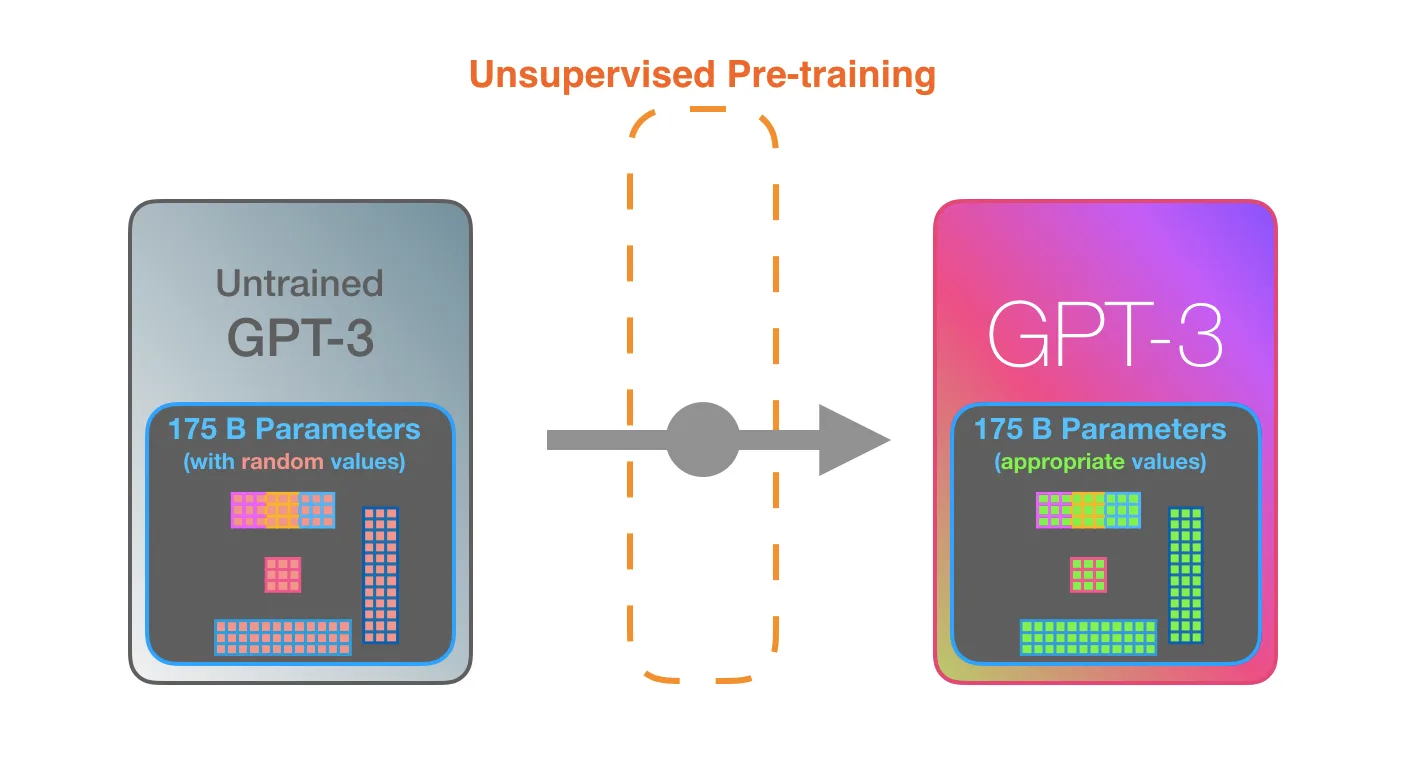
How GPT3 Works - Visualizations And Animations
- Jay Alammar
tl;dr: “The dataset of 300 billion tokens of text is used to generate training examples for the model. For example, these are three training examples generated from the one sentence at the top. You can see how you can slide a window across all the text and make lots of examples.”