Kundun (1997)
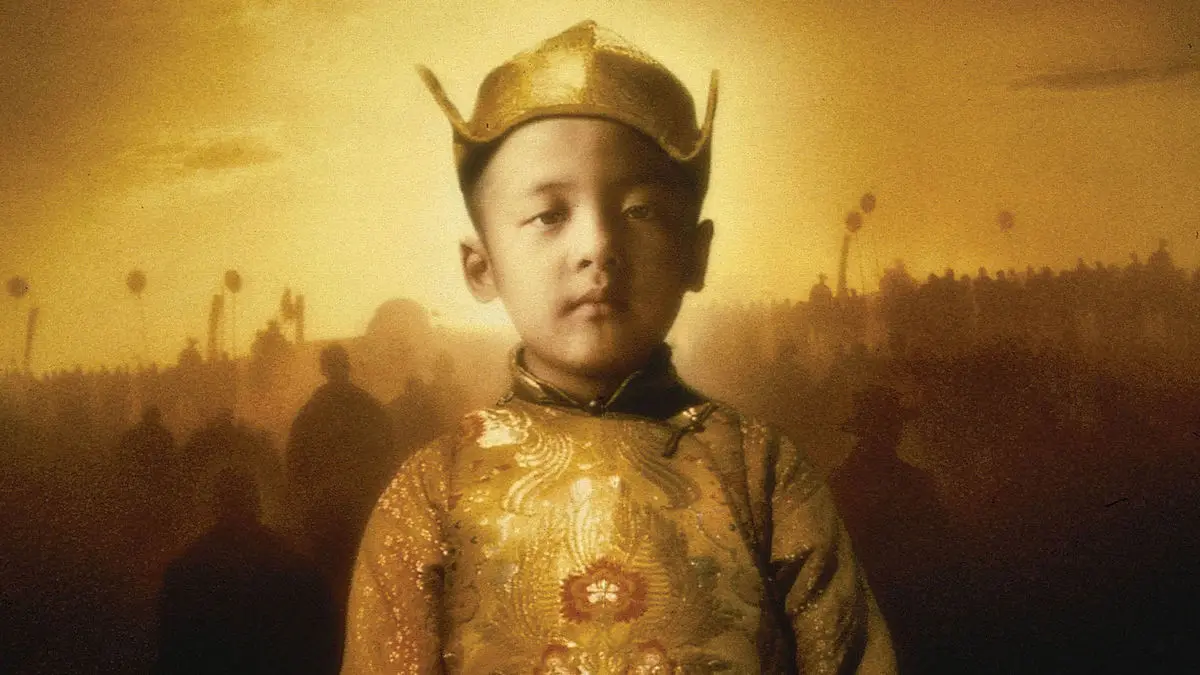
Kundun made me furious at China, furious at Disney, and weirdly unmoved by Kundun.
I’d never heard of it until a few days ago, and there’s a reason for that. I’m in the middle of the Blank Check Scorsese miniseries, catching up on everything of his I missed. China objected to this one, Disney opened it in two theaters on Christmas Day and barely pushed it after that, and the next year Michael Eisner flew to Beijing, apologized, and told China’s premier the good news was that nobody watched it. He was trying to get a theme park built at the time. Honestly, fuck Michael Eisner.
I get why the Chinese government is pissed, too. They look terrible in this, and they look terrible because they invaded Tibet and committed horrible crimes there.
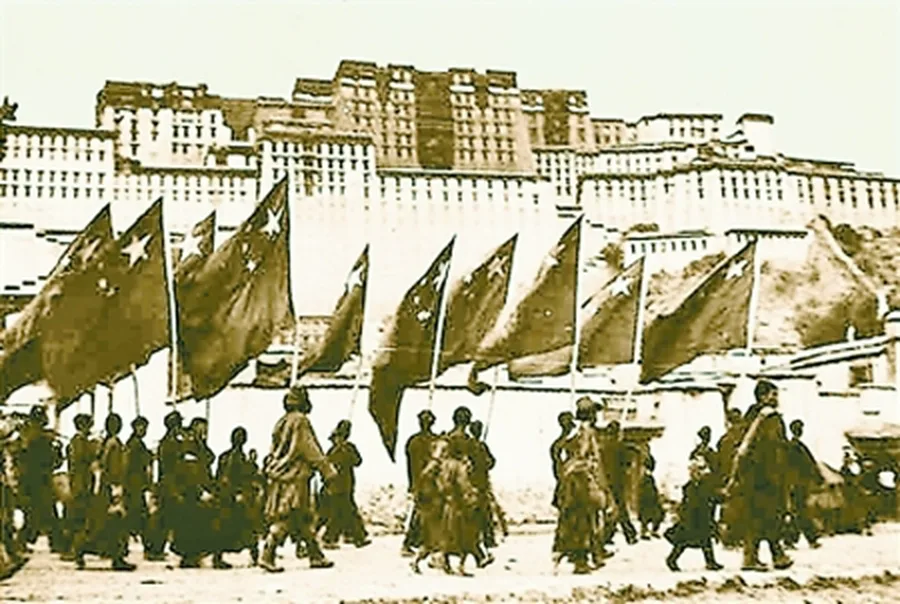
It made me enraged all over again. I’d never looked into the plight of Tibet before, and I came out knowing a lot more than I went in with, so the movie did that job.
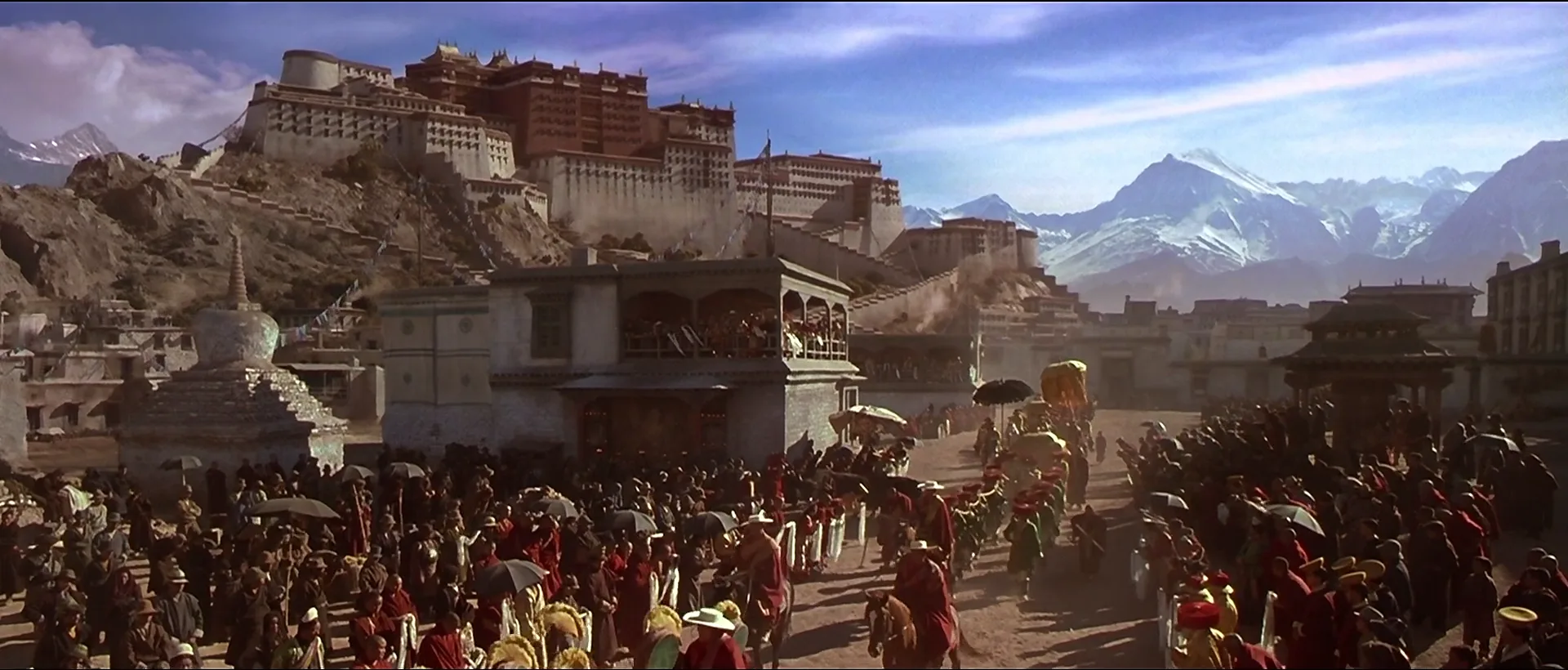
It’s also the least Scorsese-like movie I’ve ever seen. It’s impressionistic and artful, shot by Roger Deakins and scored by Philip Glass. Whole squares of Lhasa fill with monks in red and saffron, so many that the crowd moves like one slow tide under the Potala.
The worst of the invasion comes to him in a dream. He stands distraught in a red circle of dead Tibetans, and the camera pulls up and away until there are too many bodies to count and they stop looking like people.
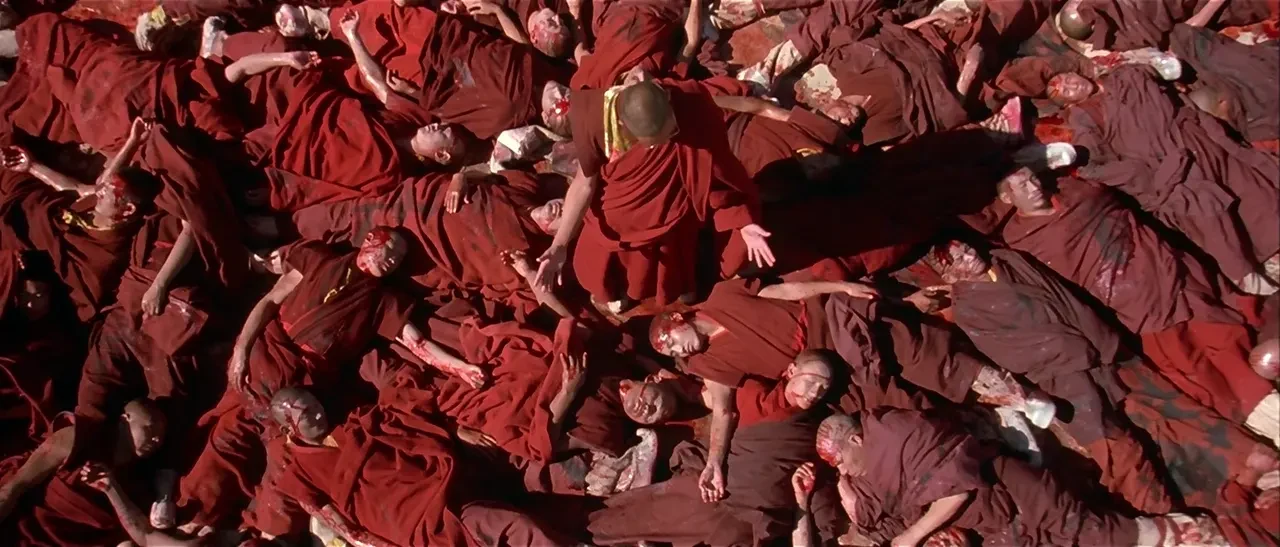
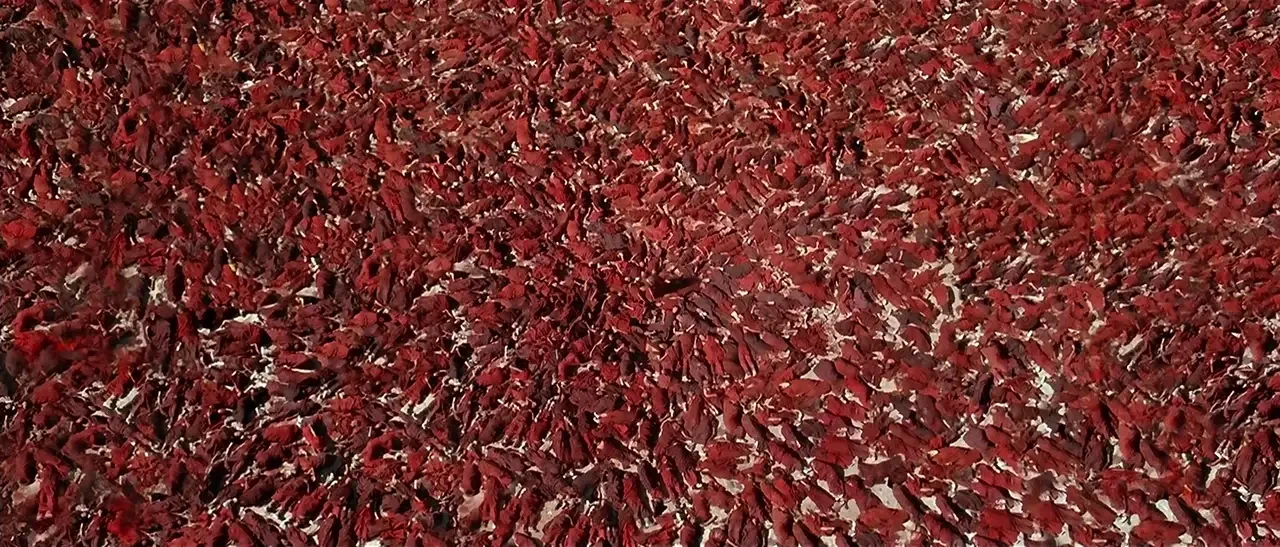
The colors and the sheer number of extras reminded me of Kurosawa’s Ran. In Ran the red is banners on an army that’s still alive. In Kundun it’s robes on the dead.
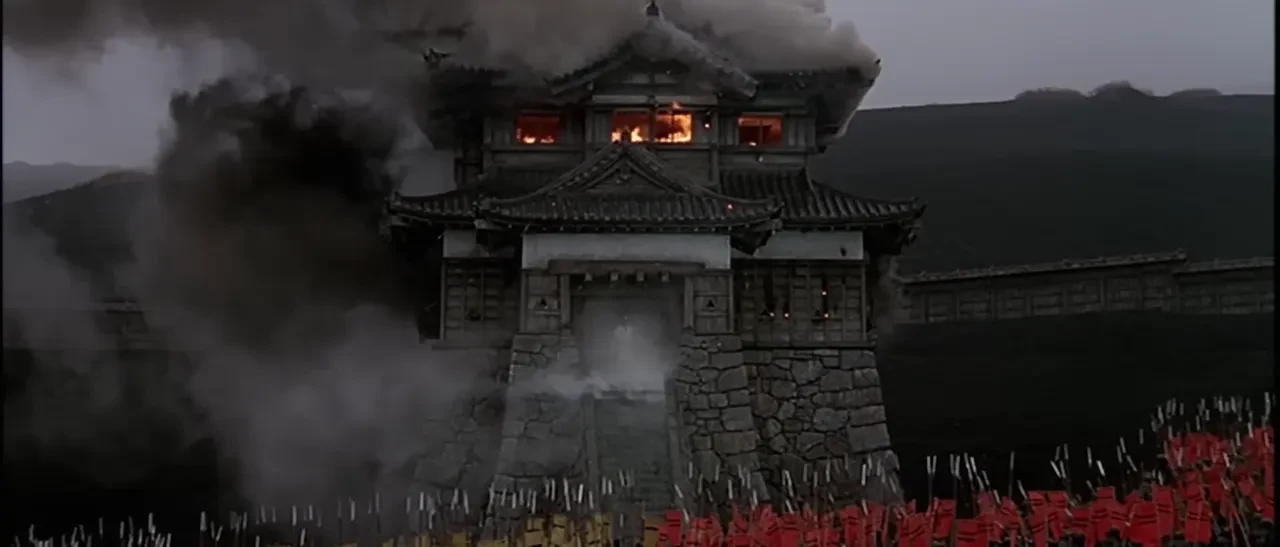 Ran · 1985
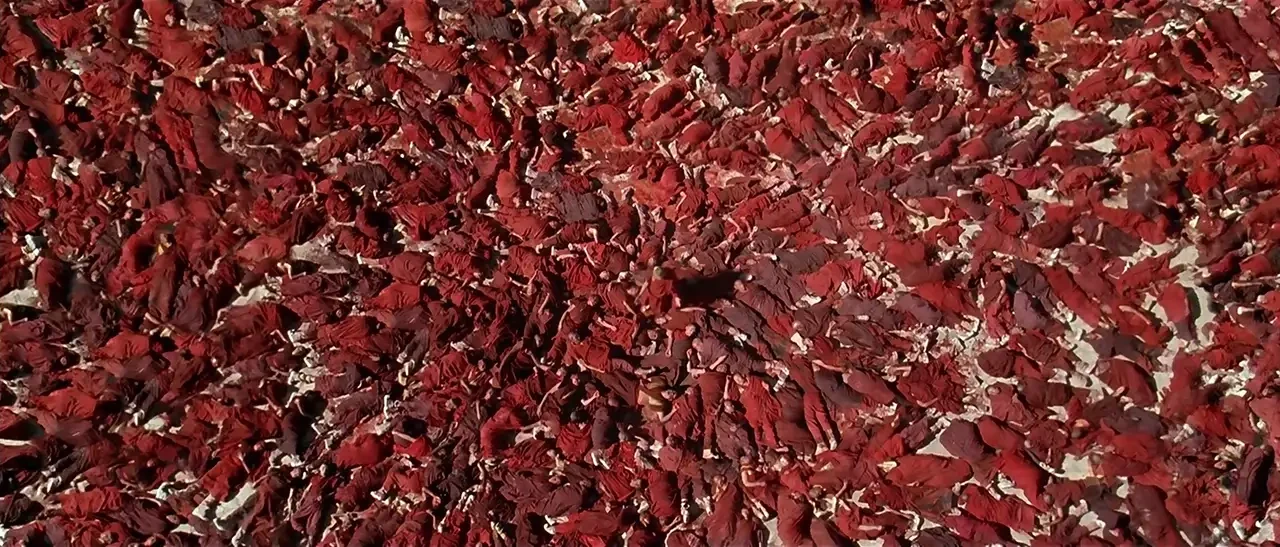 Kundun · 1997
It does rhyme with The Last Temptation of Christ, though. Both take a spiritual leader and show a man instead of a god, struggling with human feelings and a political situation way too complicated for anyone to win. But Willem Dafoe plays Jesus manic, like a man fighting his own mind. Tenzin Thuthob Tsarong plays a monk, and he rarely lets an emotion out.
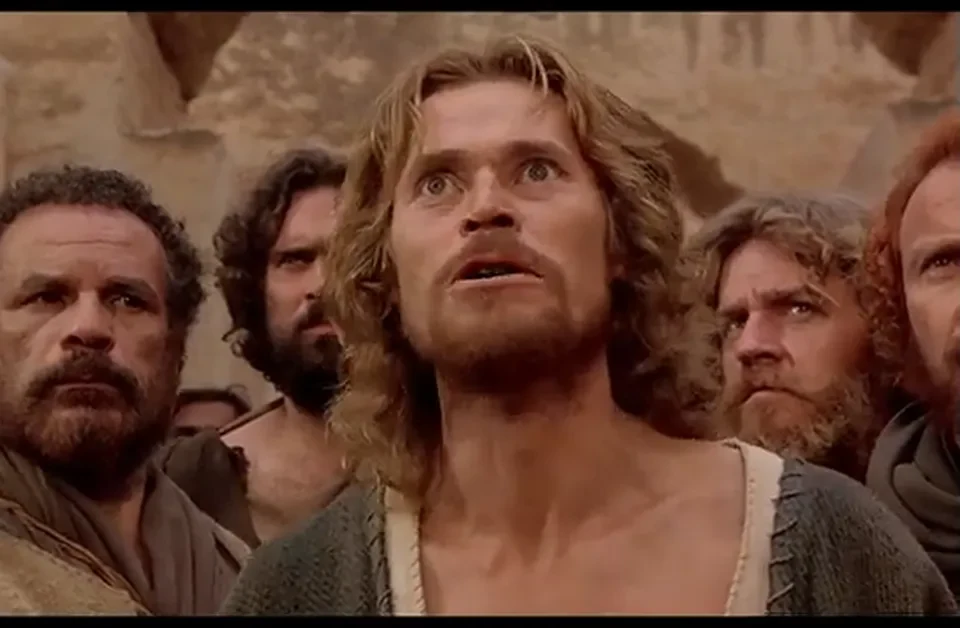 The Last Temptation of Christ · 1988
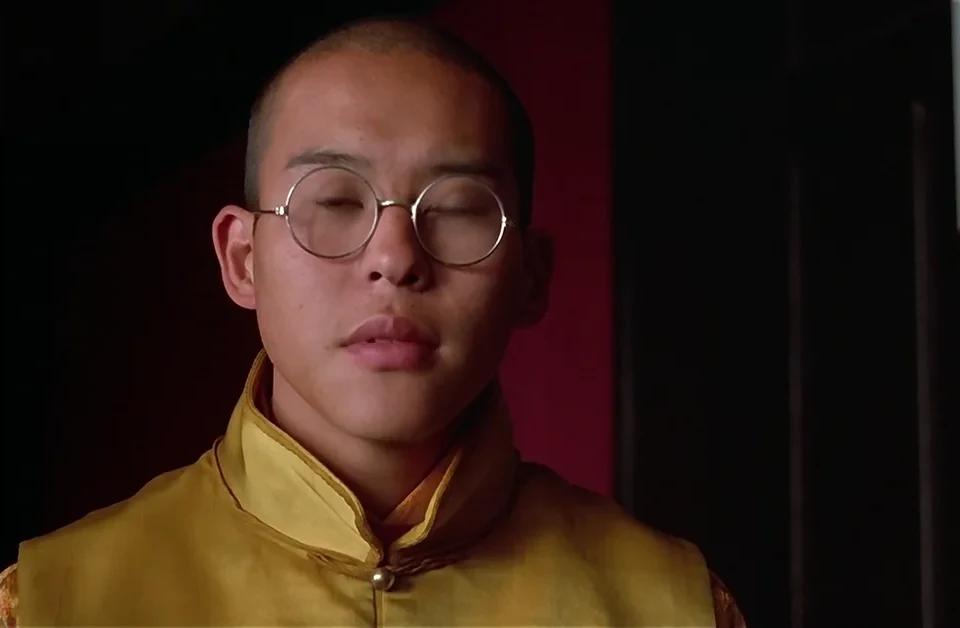 Kundun · 1997
I think that’s intentional, and probably true to life, and it still makes him hard to connect with.
It doesn’t help that the Dalai Lama is physically kept away from what’s happening. He keeps asking to see, and his handlers keep telling him it isn’t for his eyes.
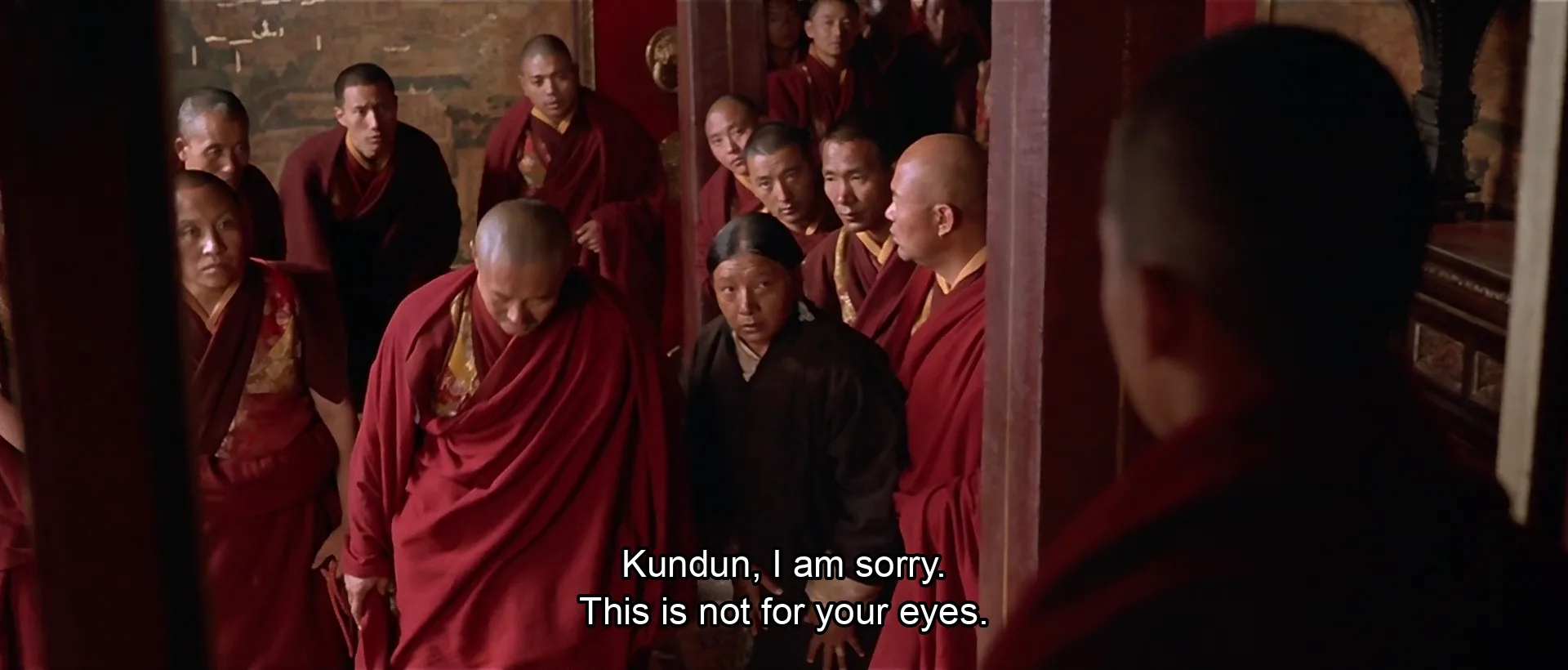
Which means it isn’t for ours either. Scorsese keeps putting a telescope in his hands. As a boy he watches Lhasa through one from the Potala roof, and what he sees is guards with rifles on a wall, too far off to hear. Spoiler: In the last scene he’s still looking through one, at the mountains between him and home.
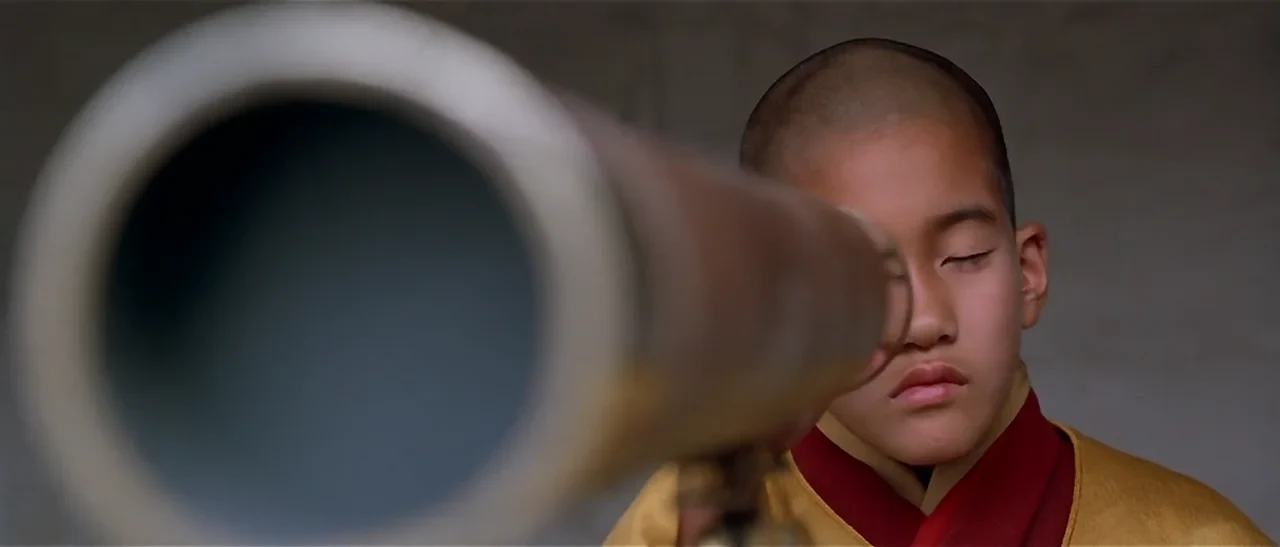
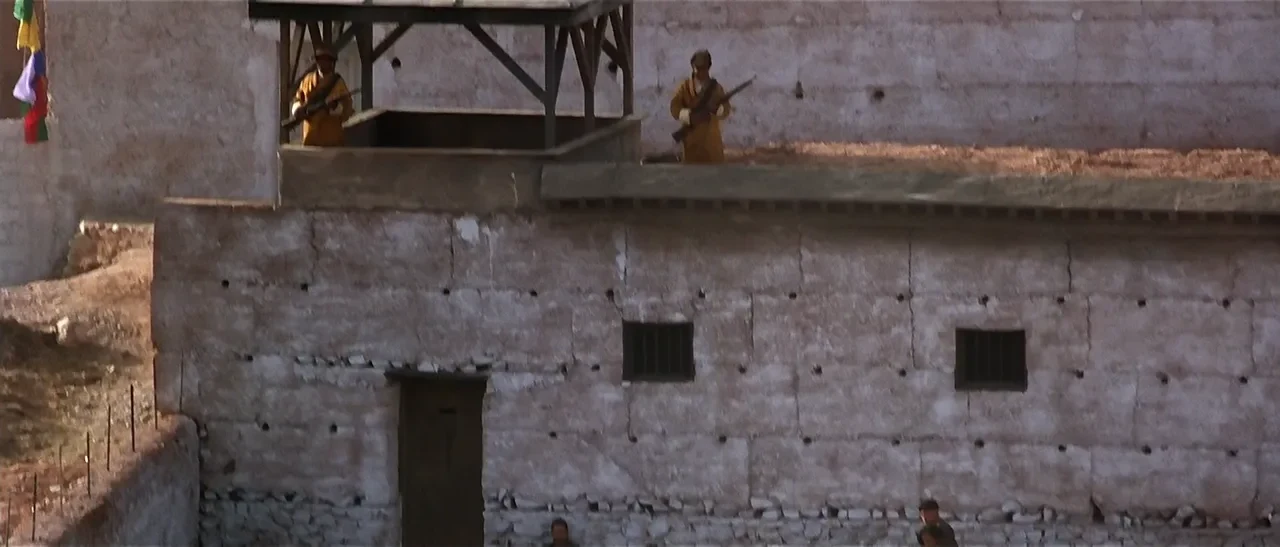
We get glimpses in dreams and on the news, filtered through a man who is held at a distance, so I was held at a distance too. By the time he flees across the border into India, I was open to it, and it didn’t hit super hard.
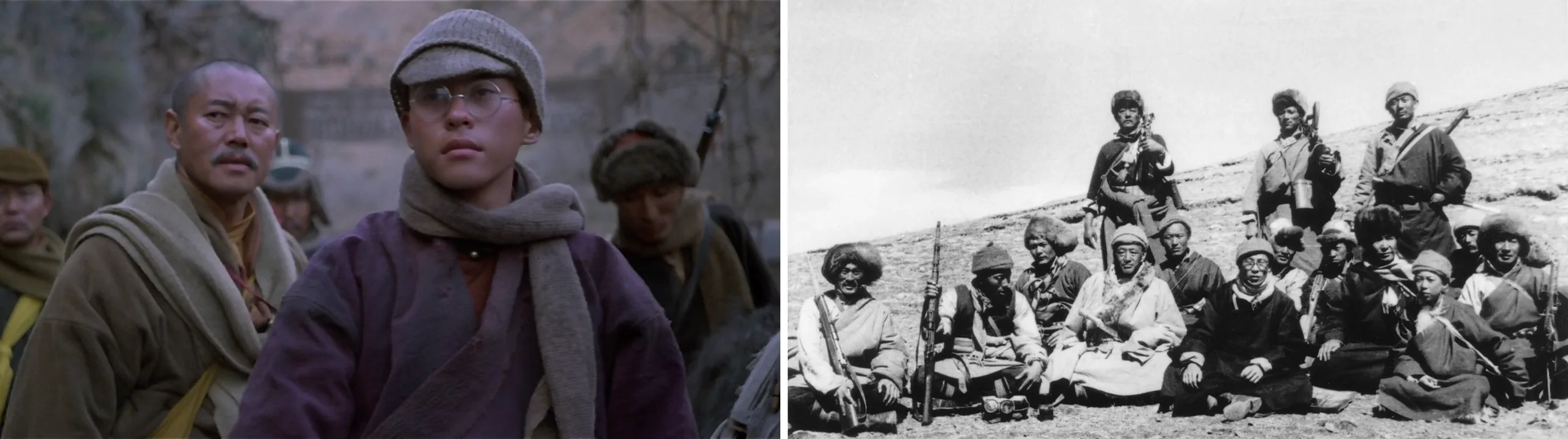
It’s a beautiful film. I respect it. I don’t know if I’ll ever revisit it.
The Dalai Lama has never been allowed back into Tibet. Shame on Disney for burying this.
Works on My Machine
If you read this far for a movie review, you might like the rest of what I write: homelab builds, AI tools and open source, by email when I have something to say.
It’s free, and you can unsubscribe anytime. You’ll get an email to confirm first.
If you liked this review, consider sharing it on Hacker News, Bluesky, LinkedIn, or X.
Joe
Karlsson
I write about my homelab, AI tools, databases, and the weird stuff I build on the side.
More about me →