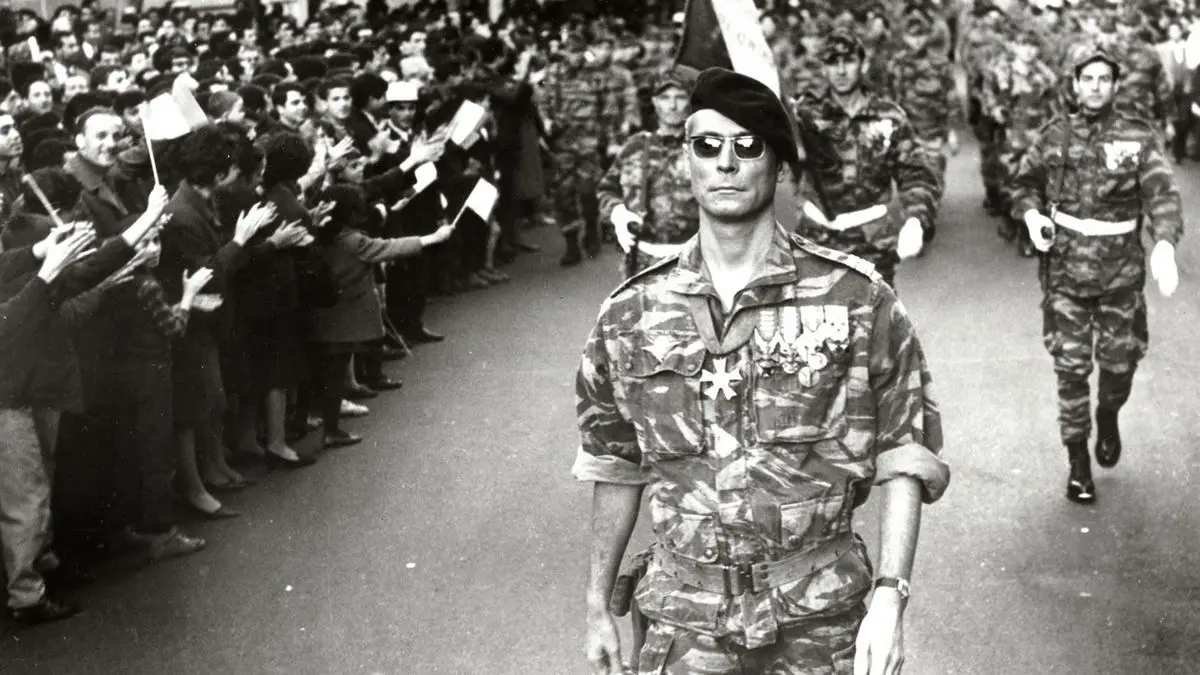
The Battle of Algiers (1966)
I’ve been scared to write this review, and frankly, I’m still processing a lot of my feelings around it.
But this is a top 10 masterpiece film for me. I fell for it hard. This movie is incredible.
It’s crazy that the Algerian government commissioned this so soon after they’d won independence from the French - we’re talking only a few years after the war ended. They were able to depict these events so clearly and without hyperbole, not turning their revolutionaries into flawless heroes or the French into cartoon villains. Both sides commit acts of horrific violence. Both sides have moments of humanity. The film doesn’t flinch from showing women planting bombs in cafes or French soldiers torturing prisoners. It’s unflinching about what liberation actually costs.
What makes this so powerful is how it treats revolution not as a romantic ideal but as a brutal necessity. The FLN organizers aren’t depicted as superhuman freedom fighters - they’re ordinary people pushed into extraordinary circumstances by the violence of colonial occupation. The film shows how colonialism creates the conditions for its own violent resistance. You can’t occupy a people, strip them of dignity and autonomy, and expect peace. The violence is a direct response to systemic oppression, and the film makes that causality crystal clear without ever glorifying the bloodshed itself.
The quasi-documentary style makes it feel urgent and immediate, like you’re watching history unfold in real time rather than a polished historical recreation. You can feel the weight of recent memory in every frame. This wasn’t some distant past being reconstructed - these were events that had just happened, with the scars still fresh and the participants still alive to consult.
What’s remarkable is how the film depicts both the necessity of resistance and the absolute tragedy of what that resistance requires. It doesn’t offer easy answers or moral comfort. It just shows you what happened and forces you to reckon with it.
I’m going to have to come back and expand on this review even more in the future because I’m still unpacking everything it made me feel. I wasn’t sure it was going to hit as hard as people said, but the ending - that spontaneous uprising, the people reclaiming the streets - really got me. It’s been sticking with me for weeks now, especially in our current moment where we’re watching similar dynamics play out across the world.
I came to this movie after watching One Battle After Another - it’s the film Leo is watching on TV in that movie. It makes total sense why PTA chose The Battle of Algiers to show in One Battle. It’s incredible and totally underscores the themes of that film as well. Both are about the costs of revolution, the complexity of resistance, the impossible choices people face when fighting for liberation, and what it means to sacrifice everything for a better world you might not live to see.
This is essential viewing. I love this movie so much, and I think everyone should sit with how uncomfortable and necessary it is.
Also on Letterboxd
Works on My Machine
Get the next post by email. My newsletter covers homelab builds, AI tools and open source, and it goes out when I have something to say.
It's free, and you can unsubscribe anytime. You'll get an email to confirm first.
If you liked this review, consider sharing it on Hacker News, Bluesky, LinkedIn, or X.
Joe
Karlsson
I write about my homelab, AI tools, databases, and the weird stuff I build on the side.
More about me →