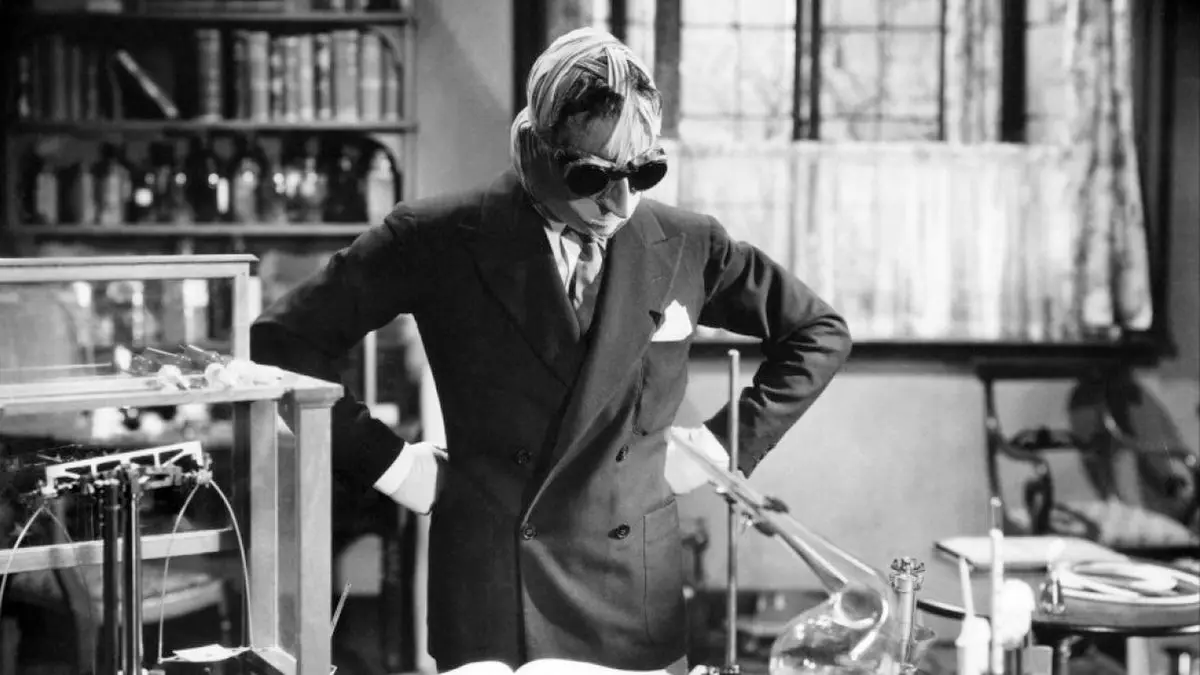
The Invisible Man (1933)
The central question of The Invisible Man is: what would you do if you had the power of invisibility? And more specifically, what would a man do with that power? I can think of some pretty terrible things, and I’m sure most men would do them - the film definitely hints at this. I’d actually seen the more recent remake with Elisabeth Moss first, and I think that version really shows the abuse of power men would inflict with invisibility. There’s a common axiom in software security: if you give people access to location trackers, someone is guaranteed to abuse it and track an ex-girlfriend. That’s exactly what the new film nails so effectively. What’s interesting about the 1933 version is that we’re never given a face for this guy before he turns invisible. We see it briefly at the end, but there’s really nothing to latch onto in terms of gaining empathy for this scoundrel. He’s more of a monstrous person than an actual monster, which I found pretty compelling. That choice still holds up remarkably well today. By denying us his humanity from the start, the film makes it clear that the invisibility didn’t corrupt him - it just revealed what was already there.
Also on Letterboxd
Works on My Machine
Get the next post by email. My newsletter covers homelab builds, AI tools and open source, and it goes out when I have something to say.
It's free, and you can unsubscribe anytime. You'll get an email to confirm first.
If you liked this review, consider sharing it on Hacker News, Bluesky, LinkedIn, or X.

Joe
Karlsson
I write about my homelab, AI tools, databases, and the weird stuff I build on the side.
More about me →