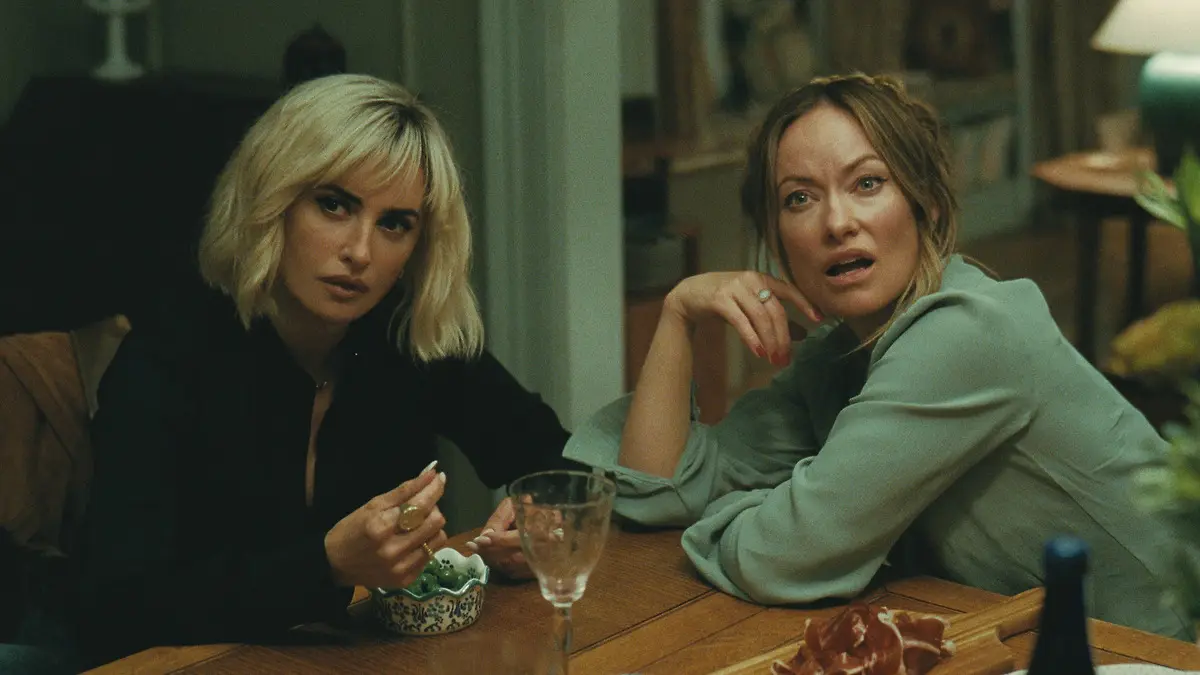
The Invite (2026)
Most people watch this and see themselves in Seth Rogen. I watched it and wanted to move in upstairs.
Most reviews of this will come from the dinner table, from the anxious couple downstairs. I watched it from closer to the ceiling. Not because I’ve got any of this figured out, I really don’t, but because the questions this movie asks are ones I’ve only recently started asking myself, and I’m still in the middle of them. So Hawk and Pína didn’t read to me as a curiosity or a provocation. They read as a door I’ve just started standing in front of, unsure but looking.
Wilde refuses to play the sex for shock or the lifestyle for a laugh, and you don’t know how rare that is until you’ve sat through the alternative. Hawk and Pína aren’t the punchline. They’re the ones walking in with the actual truths, about the compromises monogamy quietly asks you to swallow, about who you’re really choosing to be. Even the woo-ish energy talk landed for me. I got it, because I’ve started saying it.
Casting Cruz as the one dispensing all of it is a joke I loved. She’s been America’s designated European sexual conscience since Vicky Cristina Barcelona, the calm accented woman explaining desire to nervous Americans, and here she is again, Esther Perel by way of a TED talk. Norton matches her, so earnest as Hawk it aches, the best anyone has used him in decades, and he doesn’t even get the best lines.
My one real gripe, this is an English remake of a franker Spanish film, Cesc Gay’s The People Upstairs, and you can feel where an American studio sanded it down for wide release. I wanted it hornier. It keeps the bedroom door politely shut. But that flinch is the exact puritanism the movie is otherwise trying to diagnose, so I can’t fully stay mad. It argues for opening the door and then won’t open it it’s self.
As filmmaking it’s a tight bottle movie, one apartment, one long dinner, closer to Carnage or Who’s Afraid of Virginia Woolf, four people in a room while the manners come off. Wilde’s clearly living in this stuff lately, between this and her raw turn in Araki’s, I Want Your Sex, and it’s hard not to feel her own very public divorce from Jason Sudeikis breathing under Angela. I laughed a lot. I did not expect to cry.
Then two hands land on a piano at the end and I lost it, sadness and hope in the same breath. Because under all the sex talk this was never really about sex. It’s about choice. About owning the life you’re actually living instead of blaming everyone else for it. Choosing your own joy, even when it means blowing up something stable, is a virtue our puritanical culture refuses to celebrate, and I’m at a point in my life where I’m chasing that joy as hard as I can. Some people will call the movie timid for never letting anyone follow through. Maybe. But it wasn’t timid about the one thing I needed it to say, which is that we’re responsible for our own happiness, and this film felt like it was rooting for me to go get mine.
I wouldn’t be shocked if it causes a few divorces. Good.
Also on Letterboxd
Works on My Machine
Get the next post by email. My newsletter covers homelab builds, AI tools and open source, and it goes out when I have something to say.
It's free, and you can unsubscribe anytime. You'll get an email to confirm first.
If you liked this review, consider sharing it on Hacker News, Bluesky, LinkedIn, or X.
Joe
Karlsson
I write about my homelab, AI tools, databases, and the weird stuff I build on the side.
More about me →