Women in Love (1969)
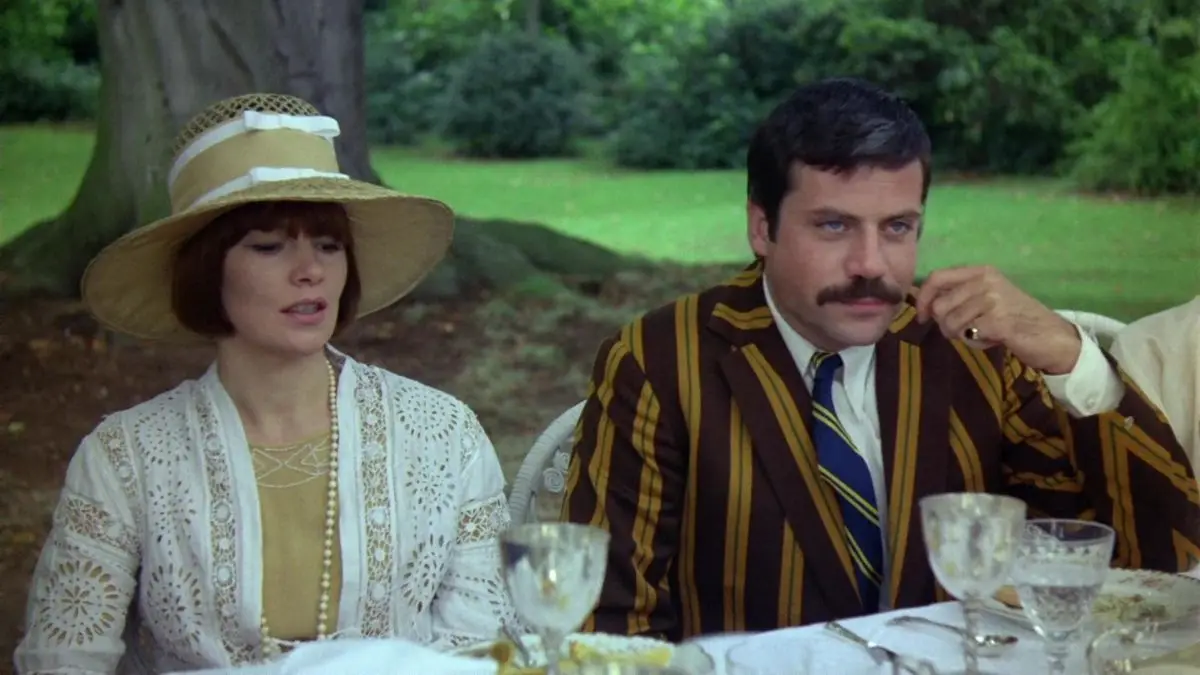
Women in Love has Glenda Jackson fighting off a herd of Highland cattle with ballet, and it’s only the second-craziest scene in the movie.
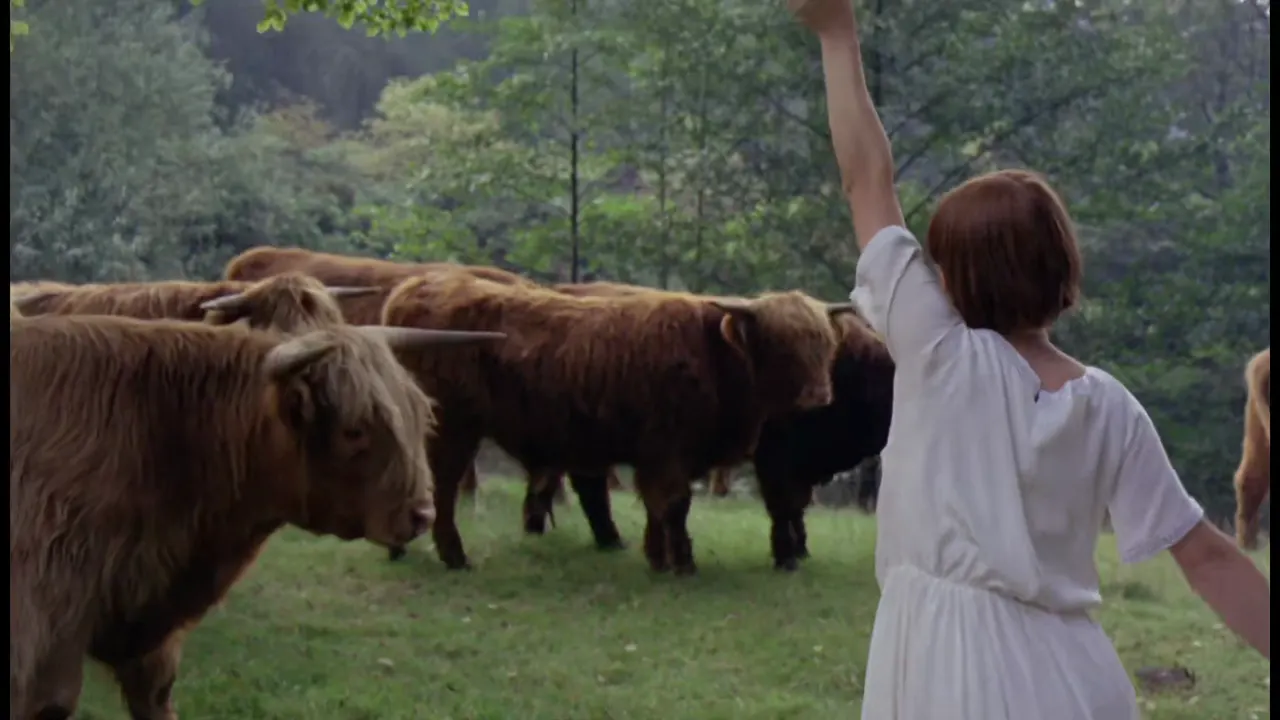
The craziest is Oliver Reed and Alan Bates wrestling naked by the fire, and it’s why I was watching. I’d just seen The Devils and wanted more Ken Russell with Oliver Reed.
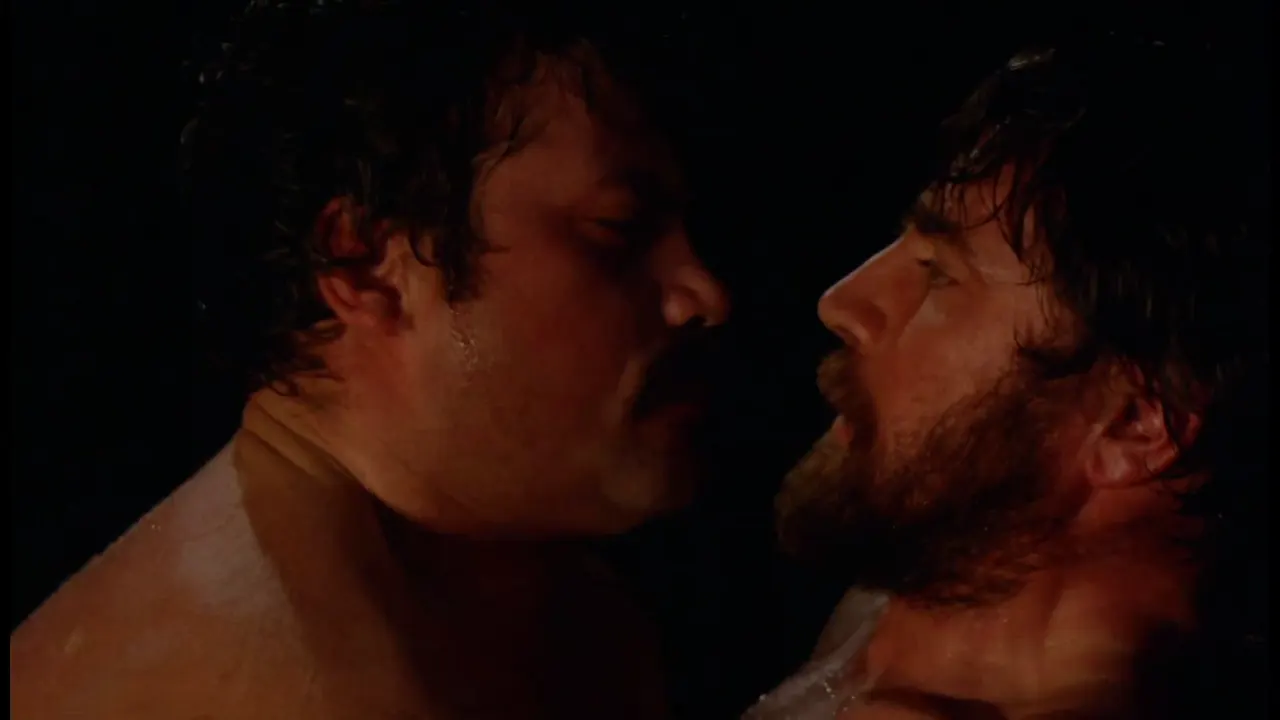
The wrestling reminded me of a lot of modern men, especially the alpha-male types obsessed with other men: showing off, being hard, impressing each other. Here the naked wrestling is just the excuse these two need to touch and be near each other, to express the love and affection the social order denies them, and that their own fear and shame deny them too. Afterward they sit by the fire panting like it’s post-coital, after nearly kissing. Then Bates’s Rupert Birkin asks Reed’s Gerald Crich to swear to love him, “Implicitly. Perfectly. Finally.” Gerald says they’ll wait till he understands it better, and he never does.
Birkin asks, and Gerald takes his time answering.
I’m bisexual, and for the last six months I’ve been watching a lot of movies about bi men: The Pillow Book, The Doom Generation, Caravaggio, I Want Your Sex. Birkin is the oldest of them, from 1969.
The film is wrestling (pun intended) with whether two kinds of love can exist in one person at the same time. Everyone kind of wants it. The strongest bonds here are between the two sisters and between the two men, but Birkin is the only one who asks for both, and he asks while he’s falling for Ursula (Jennie Linden).
Nobody, man or woman, will give him that. Biphobia doesn’t only come from straight men, and bisexual men are still some of the most closeted people in the queer community. On screen, bi men usually get written as untrustworthy, as predators, or as a phase before they pick a side. Birkin is none of those. He’s closeted, though, and so is Gerald. Birkin only finds the words once the wrestling gives him permission, and Gerald never finds them at all.
It’s a confusing movie, too. It plays like an adaptation of a book: things just happen, fast, and people change their minds without seeming to know why. I can’t tell if that’s on purpose or shoddy filmmaking, but it does make me feel the confusion these people feel. This is a film about four people raised in a society that won’t let them feel, or say it, or love the people they want to love, and about the emotional wreckage of being a human with complicated feelings about love and sex and lust. All of them felt like emotional toddlers, trying to navigate feelings about love they never grew up knowing how to express.
I’m also not sure how much sympathy I owe these men. They’re assholes, and I think the film knows it. Right after asking Gerald for that oath, Birkin decides women are “all the same,” full of “lust for passion” and “greed for self-importance in love.” And yet by the end we’re asked to ache over their unrequited love, feelings nobody else in the film can hold, including the women they treat like this. I haven’t decided if that’s a contradiction or the point. Spoiler: Gerald’s death in the snow is where all that wreckage ends up, with a man who never could say what he wanted. Spoiler: When Birkin cries “He should’ve loved me. I offered him.” over the body, the man who decided women are “all the same” is grieving the love he wanted.
Polite society here is all control. Hermione’s house party gets a dance “in the style of the Russian Ballet” in a marble hall full of statues.
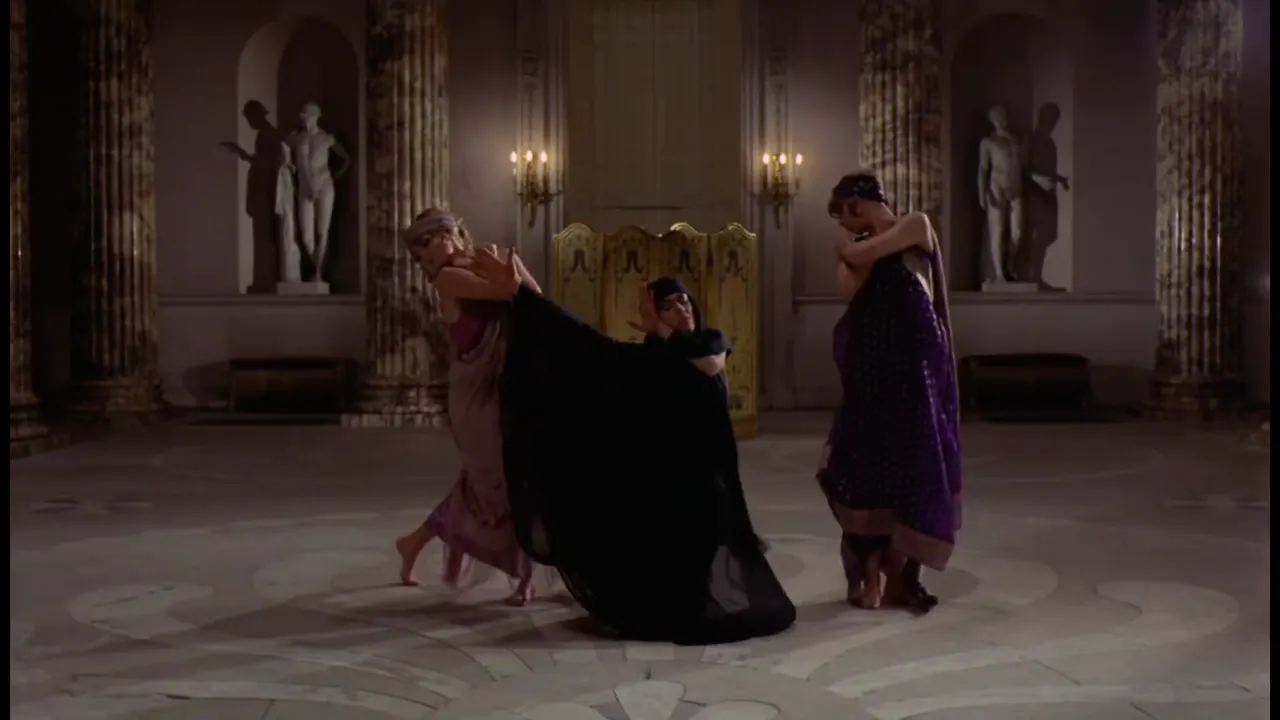
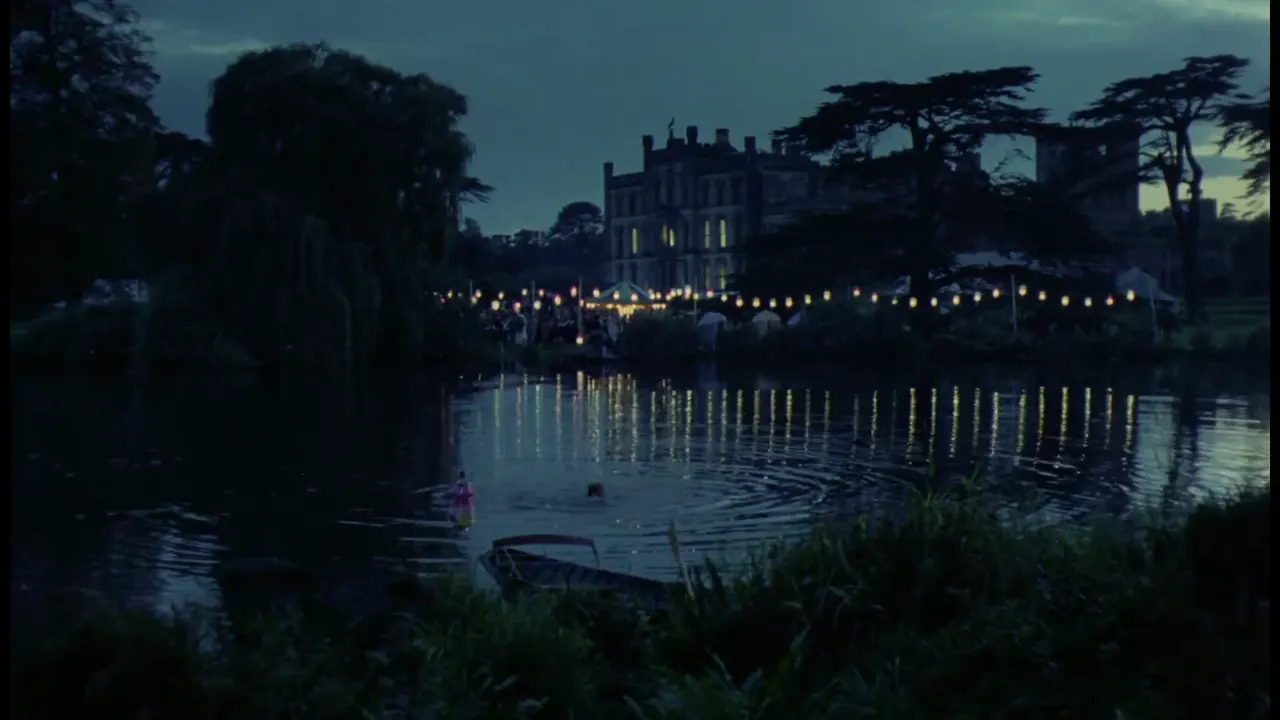
Even the lake is managed, water Gerald says he’s “responsible for.” Spoiler: His sister drowns in it at his own party, and his answer is to let the water out.
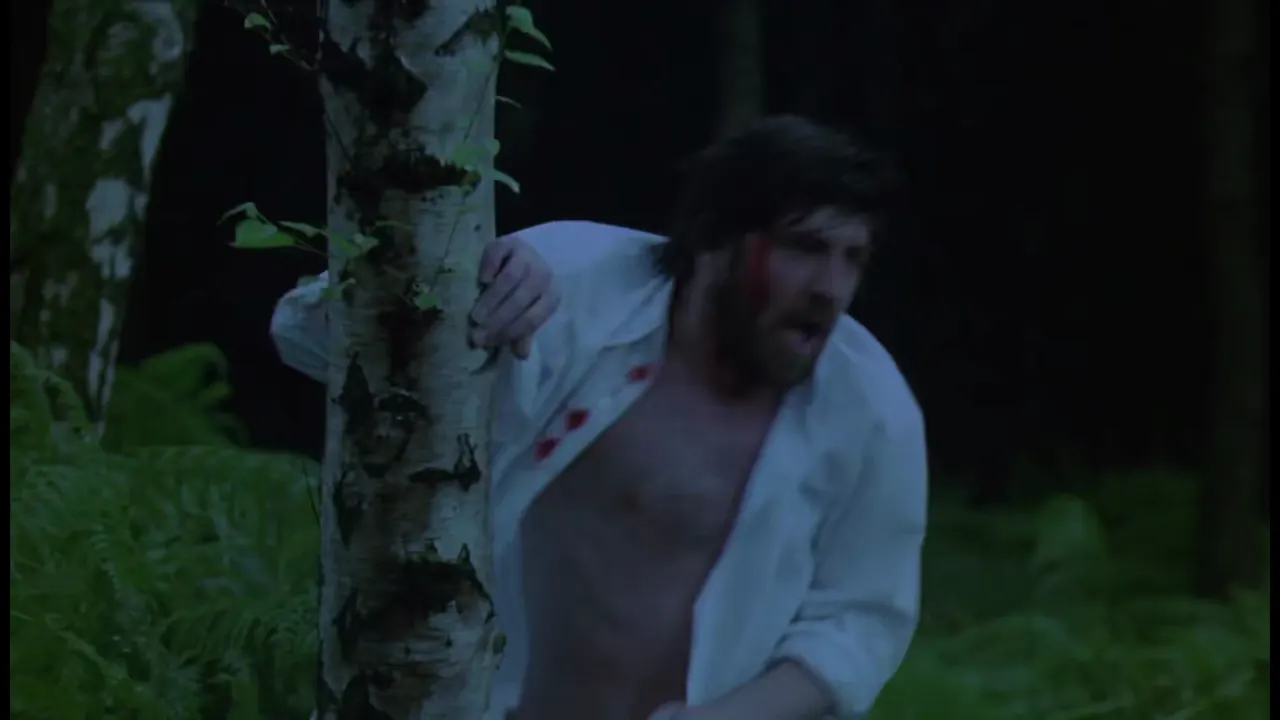
Feelings get out in the woods. After Hermione’s party, Birkin wanders naked through the trees.
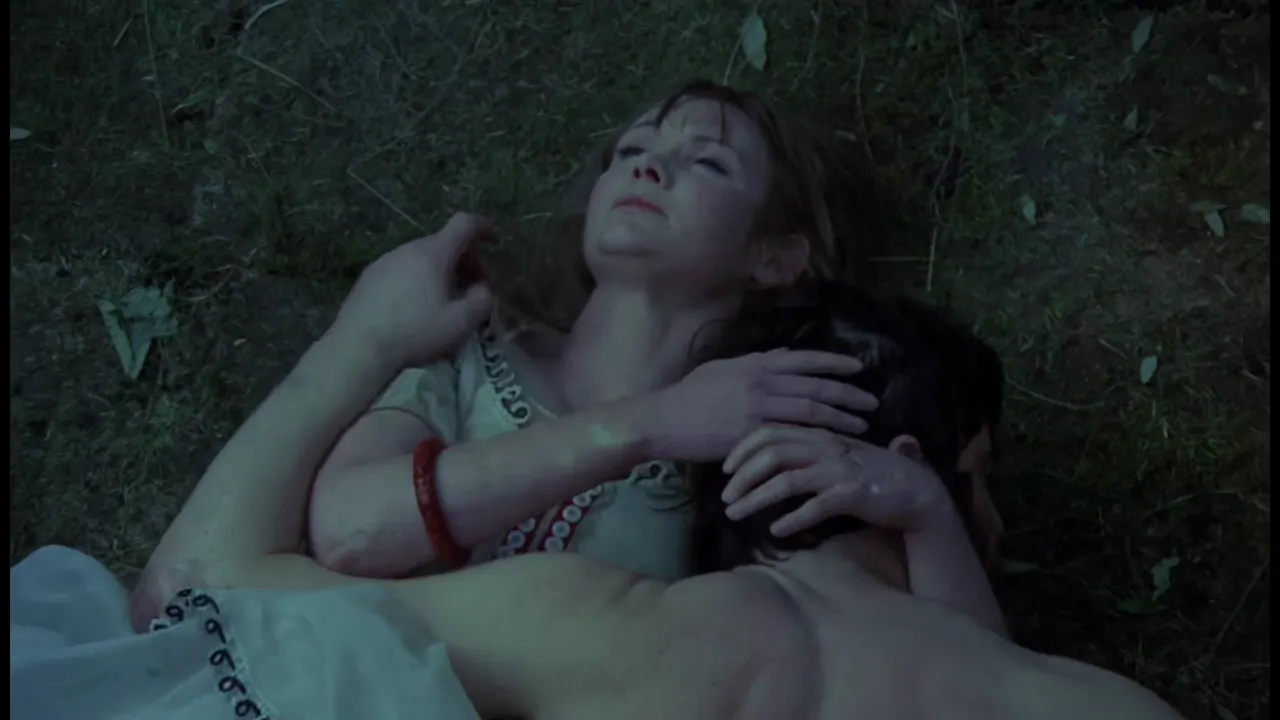
Later he and Ursula have sex in the grass.
It’s a beautiful film, most of all outside.
It ends abruptly. My girlfriend and I sat slack-jawed, asking each other if that was really how it ended. It was, and Birkin is still asking. Spoiler: The last scene is the “pick a side” line, and it comes from a straight woman. Ursula tells Birkin, “You can’t have two kinds of love.” He says, “I don’t believe that,” and the film cuts to her stunned face and ends.
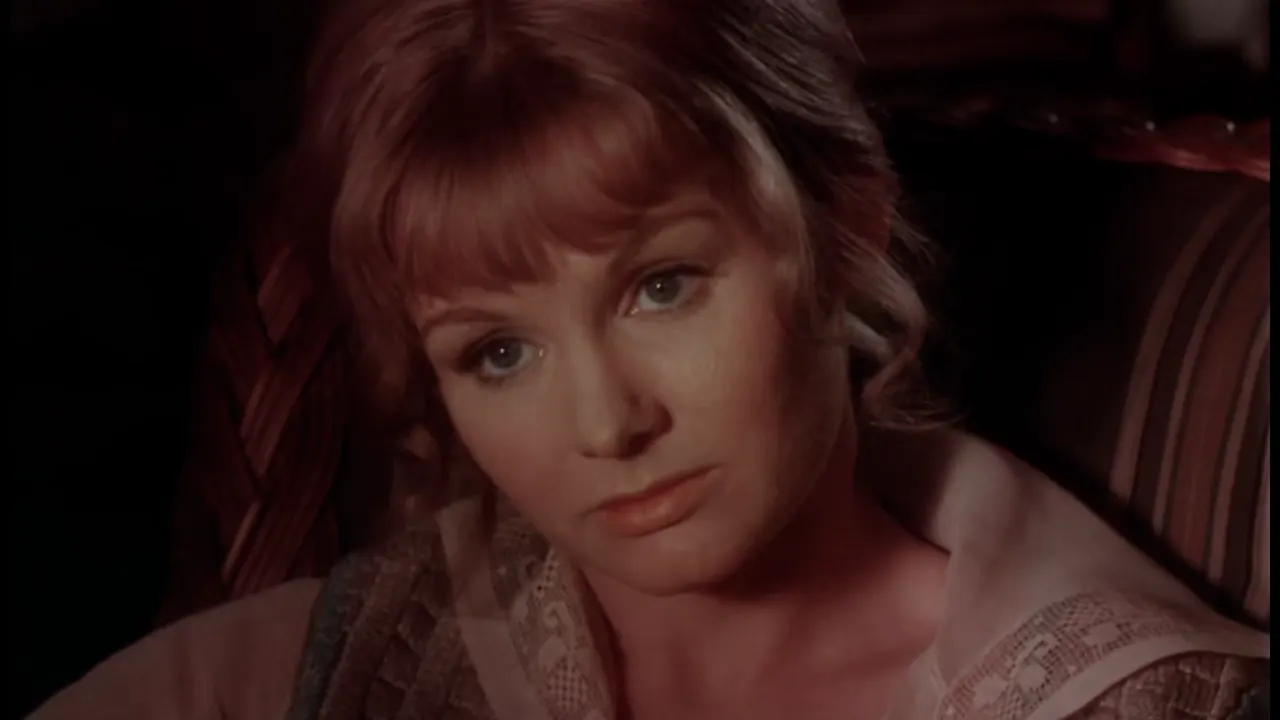
Russell gives the bi man the last word and leaves the argument open, and that’s what made it feel so abrupt. I watched that ending next to my girlfriend, and I’m with Birkin. You can have two kinds of love. You can have many kinds of love, and all of them are valid and real. People need to get over it; that’s just how people are wired.
- Oliver Reed talked Ken Russell into the wrestling scene by wrestling him in his kitchen.
Works on My Machine
If you read this far for a movie review, you might like the rest of what I write: homelab builds, AI tools and open source, by email when I have something to say.
It’s free, and you can unsubscribe anytime. You’ll get an email to confirm first.
If you liked this review, consider sharing it on Hacker News, Bluesky, LinkedIn, or X.
Joe
Karlsson
Technology is better when it's weird and it's yours. Everything I write about runs in my house.
More about me →