How I use AI (November 2026)

Blog How I use AI in November 2026: agents help run my house and homelab, and six layers, from CLAUDE.md down to Claude Code hooks, decide what they can touch.
TL;DR A lot of my AI use runs my house and homelab. What makes that safe is a stack of six layers: rules every session reads, knowledge it reads only when a task needs it, skills, subagents, memory, and hooks at the bottom for what has to hold. When a rule keeps failing where it is, it moves down the stack, and by the third repeat it is a hook. My AI policy is four lines, and code enforces two of them.
On this page
A prompt I type a lot: “Why is Plex down?” A lot of my AI use goes to my house and homelab, and it’s the part I rarely see in other people’s “how I use AI” posts. Letting agents work on a homelab taught me that one instruction file isn’t enough. My setup is now a stack of six layers, from a short file every session reads to hooks that can block a command before it runs, and the most useful question I ask about any rule is which layer it belongs in.
The shape of this post comes from Ben Stolovitz’s How I use AI (Oct 2026)1, so you can read the two side by side. Claude wrote the first draft from my outline, notes and session logs, and I edited it.
I do developer relations at a data company, I paint, and I run a homelab in my attic where OpenTofu manages every container and Home Assistant runs the house. The terminal, voice dictation and git worktrees behind all this are in my 2026 development setup Sep 30, 2026My Development Setup in 2026, and why I moved everyday coding to open models is in Breaking up with Claude Code
 Oct 6, 2026Breaking up with Claude Code. Everything in this post still runs in Claude Code (version 2.1.327 as I write this), and it’s about what sits on top of the tools.
One prompt from earlier this month: “On Home Assistant, I just got a critical alert. Heat safeguard failed. What’s going on?” Agents run my homelab health check, clean up Home Assistant automations, sort media libraries and walk me through decommissioning services I’ve stopped using.
A bad command in a homelab deletes real things, so the house runs on a ladder. Each rung can do more damage than the one before it:
- Read anything. Logs, configs,
journalctl, backup reports. Reading never needs my OK. - Propose, then wait. My health check’s instructions say to report every finding with its root cause, propose a fix for each, and wait for my go-ahead before changing anything, “even for fixes that seem obviously safe.”
- Change it after I say yes.
- Some things never happen, whatever I say in chat. OpenTofu manages every container, and they’re supposed to be immutable, so a hook blocks any write inside one and lets read-only commands through. Other hooks stop an agent from restoring a Home Assistant backup or deleting a certificate on my reverse proxy.
My global CLAUDE.md is 55 lines, and every Claude session on every machine reads it first. It only holds what’s true everywhere: test the change yourself, don’t hide failures, read a subagent’s diff before believing it, stay in the repo you were asked to work in. When my notes grew past that, every session paid for rules it didn’t need, and splitting my homelab notes by concept Oct 30, 2026Can Open Knowledge Format make Claude Code more accurate and cheaper? I tested it cut startup context in half.
Long rule sets live in separate files: 36 banned AI design patterns, 19 UX laws, a website launch checklist, motion rules. An index tells the agent when to read each one, in its own terms: “Read before designing or styling any website, web page, HTML artifact…” The index line is the part that matters, since the agent only opens a file when a line tells it to.
A skill is a workflow I’d otherwise explain again every time: the health check, decommissioning a service, writing a blog post, /grill-me for stress-testing a plan before I commit to it. Skills fail by not firing. My “lazy senior dev” skill, meant for every coding task, loaded zero times in 1,550 sessions in my logs because its trigger never matched. Now a hook reminds the agent to load it on the first code edit.
A subagent gets one job and its own context. My site’s design review runs four reviewers in parallel, and none of them sees what the others found, because in my runs reviewers who read each other’s notes tended to agree with what was already there. They have their own failure: they drift toward convention and sand the personality off a page, so each one now gets a list of the quirks to leave alone.
This layer holds judgment calls: “never swap the site font unasked,” “employer posts never use the employer’s stock art.” My site’s memory has about 60 of them, and each one carries a dated “Why” in my own words, so an agent can tell a hard rule from a one-off preference. Design verdicts go in a DECISIONS.md in the repo.
Verdicts kept getting lost when a long session compacted its context. My logs had 17 messages like “This is the fourth time I’ve told you” in a month. A hook now reloads DECISIONS.md after every compaction.
A hook is code that runs on a Claude Code event, and some of them can stop the agent. One runs before every shell command and blocks writes inside an immutable container. One runs when the agent tries to end its turn, and another reloads DECISIONS.md when a session starts or compacts. Not every hook blocks: the one for my lazy senior dev skill only reminds, and the agent can still ignore it.
Blocking hooks fail by blocking too much. In October the container guard made me use its override for a plain SELECT on my analytics database, and on November 12 I replayed 337 blocked SSH commands from my session history and let through the harmless reads among them. Hooks also only see what goes through Claude Code, so a command I type in my own terminal skips all of them. I covered what hooks and mods can and can’t catch Oct 16, 2026First impressions of Claude Code mods in October.
Most rules start as something I say once in chat. If I have to say it again, it goes into memory or CLAUDE.md. If I have to say it a third time, it becomes a hook.
The clearest case was mockups. I want to see a design on my screen before an agent builds it, and agents kept handing me a file path instead. The rule sat in my homelab project’s memory, where agents in my other repos never saw it, and in the four weeks before the fix I typed some version of “open it” about 45 times. On November 9 I typed “I always have to remind you, and then tell you to make a skill or a hook or a memory.” The hook shipped on November 12: when an agent makes a page and tries to end its turn without opening it, the hook stops it and hands it the paths to open. In the five days since, I’ve had to ask once, which is a short window.
Mitchell Hashimoto described the same instinct2 in February: when an agent repeats a mistake, build something so it can’t.
When I’m about to tell an agent something for the second time, I go down six questions and stop at the first yes. They don’t follow the stack’s order: what a mistake would cost comes first, then what kind of rule it is.
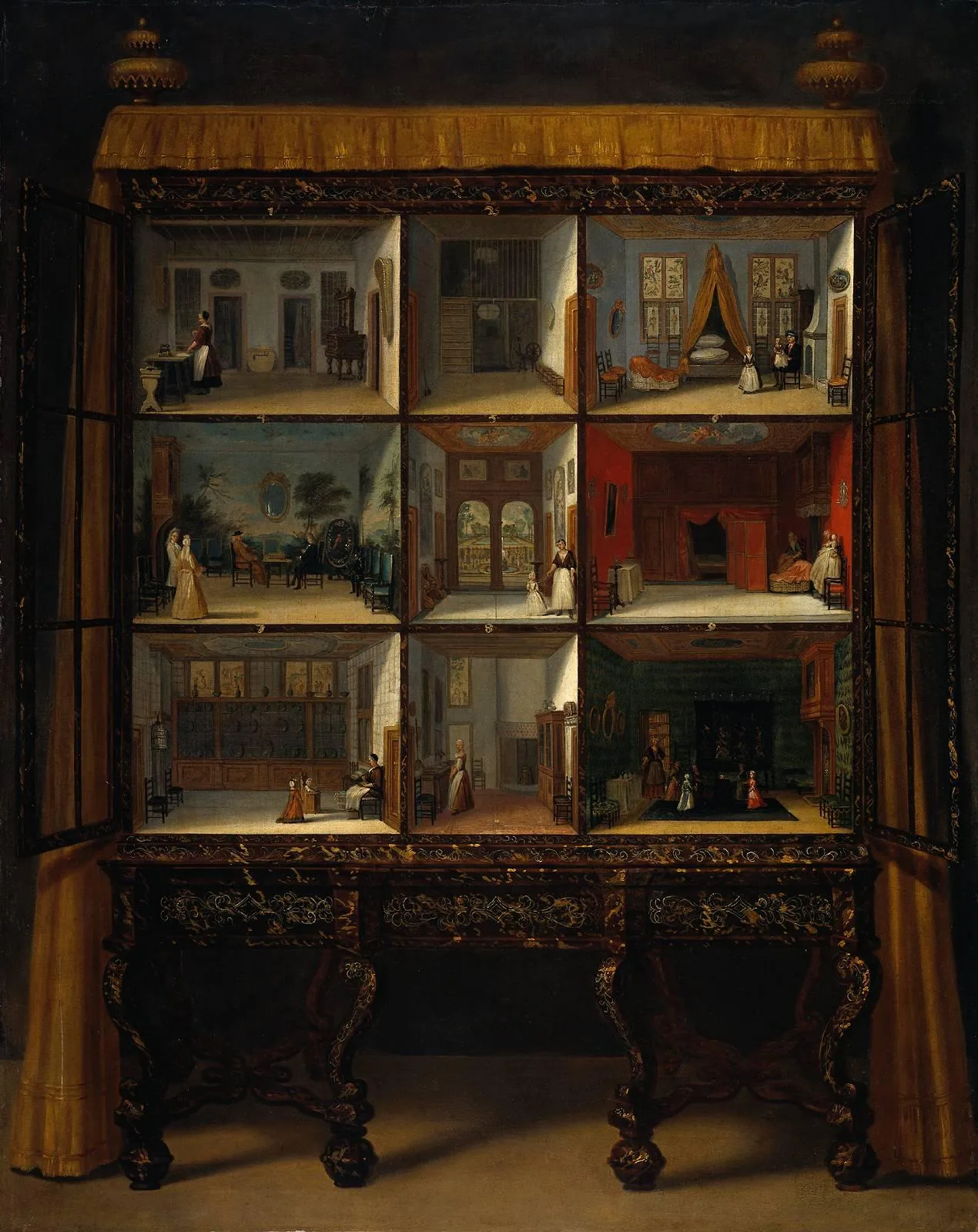
Ben is drafting a personal AI policy. Mine is four lines, and the layer that enforces each one matters more than the wording:
- I don’t generate images, music or video. Pictures here are public-domain photos, meme templates and my own recordings. A test fails any thumbnail whose photo lacks a Wikimedia Commons credit.
- What I say in chat stays in chat. An agent hears a lot about my life while it works on my house. That rule lives in its memory.
- Nothing irreversible happens without me. Hooks block it.
- AI drafts and I edit. The pipeline for that is a skill, and I wrote about building it in 2025
 Oct 24, 2025Building a Claude Code Blog Skill: What I Learned Systematizing Content Creation.
Code enforces two of the four. The other two depend on the agent remembering.
- Count your repeats. The third time you type the same correction, make it a hook.
- Start your agents read-only, and make them propose before they change anything.
- Write down why with every correction, so the next session knows how hard the rule is.
Works on My Machine
Get the next post by email. My newsletter covers homelab builds, AI tools and open source, and it goes out when I have something to say.
It’s free, and you can unsubscribe anytime. You’ll get an email to confirm first.
If you liked this post, consider sharing it on Hacker News, Bluesky, LinkedIn, or X.

Joe
Karlsson
I write about my homelab, AI tools, databases, and the weird stuff I build on the side.
More about me →